
2026-10-06 · Maleko Kealoha
Common AC Noises After Trade Winds Pick Up
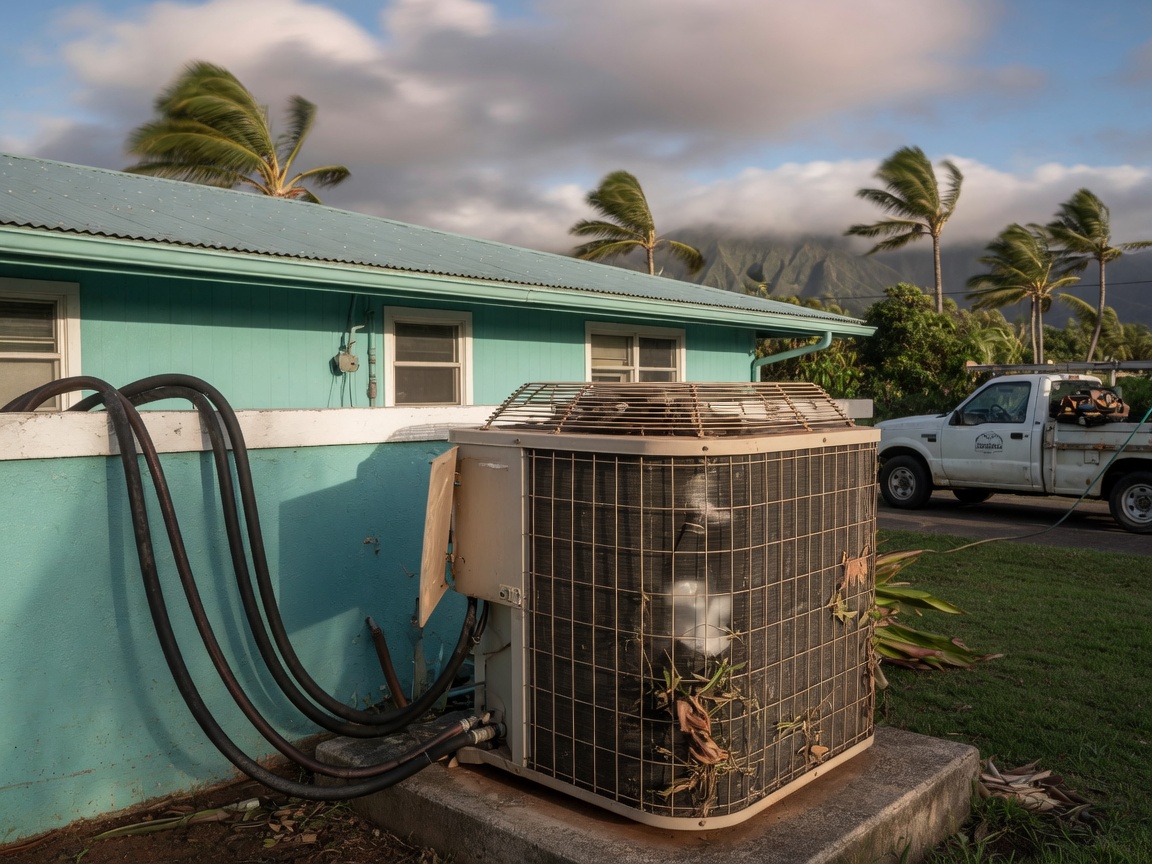
Trade winds in Kaneohe commonly produce rattling from loose access panels, whistling through clogged filters, and occasional banging from fan blades hitting debris within 24 to 48 hours after winds strengthen.
How Trade Winds Affect AC Units in Kaneohe
Kaneohe sits on the windward side of Oahu where consistent trade winds blow salt spray and fine red dust from the Ko'olau range straight into outdoor condensers and intake grilles. These winds reach 15 to 25 mph most afternoons and can gust higher near Kaneohe Bay, vibrating cabinets and forcing particles past the coil fins. Homeowners in older single-wall construction homes near Ho'omaluhia Botanical Garden notice the effects first because those units sit closer to ground level and collect more debris. The same winds that cool the island also accelerate wear on fan motors and fasteners that were already exposed to constant humidity. When to Replace AC Filters in Hawaii's Salty Air explains how quickly filters load in this environment.
Rattling and Vibrating Noises
Loose screws on the top panel or side access door are the most frequent source of metallic rattling once winds pick up. A 1/4-turn loose fastener allows the panel to flex against the frame at 15 mph, creating a sharp tapping sound every few seconds. In units installed on rooftops in Kaneohe Bay neighborhoods, vibration travels through the mounting rails into the home, making the noise seem louder indoors. Check the four corner brackets first; tighten them with a 5/16-inch nut driver while the system is off. If the sound continues after tightening, inspect the fan blade for a cracked hub or missing balance weight, both common after years of constant wind load.
Whistling, Hissing, and Airflow Sounds
High-pitched whistling usually starts when the filter or evaporator coil becomes partially blocked by salt crystals and dust stirred up by the trades. Restricted airflow forces the blower to pull harder, creating a whistle at the return grille or at the filter slot. In homes between Kailua and Kaneohe, the salty air accelerates this buildup, sometimes within two weeks of the last filter change. A hissing sound near the outdoor unit often indicates a small refrigerant leak at a flare fitting that has loosened from vibration. How Humidity and Rain Affect AC Performance in Kaneohe covers how moisture combines with salt to speed corrosion on those fittings. Turn the system off and schedule AC Repair rather than adding refrigerant yourself.
Banging, Clanking, and When to Call for Service
A single loud bang followed by continued operation usually means a piece of debris has entered the fan compartment and struck the blade. Repeated clanking points to a failing motor mount or a loose compressor hold-down bolt, both of which worsen quickly under sustained trade-wind vibration. Homeowners in Honolulu County who hear these sounds after a windy period should shut the system down at the thermostat and disconnect power at the outdoor disconnect. Note the exact timing and location of the noise, then contact a technician familiar with windward-side installations. Early attention prevents a small loose part from damaging the fan motor or coil.